
A Guide to Eco House Design Principles for Sustainable Modern Living
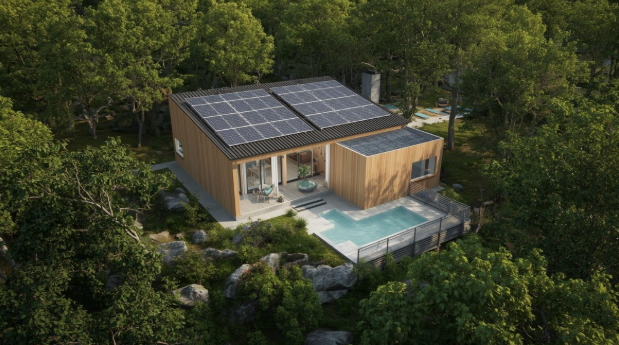
Eco house design is a sophisticated architectural response to the dual challenges of climate change and rising operational costs. It is a philosophy that minimizes environmental impact through the meticulous calibration of materials, energy systems, and spatial planning. Also known as high-performance or "fabric-first" architecture, it prioritises the health of the planet and the occupant by utilizing renewable resources and ensuring the structure sits in harmony with its landscape.
At HPW, we believe that sustainable living should not require a compromise on luxury or commercial viability. For us, eco house design principles are the foundation of future-proofing a home. Whether you are a private client or a developer, a sustainable build is a high-value asset that offers resilience against volatile energy markets and evolving building regulations.
The HPW Ethos: Architecture as Environmental Stewardship
Architecture is frequently reduced to its aesthetic appeal, but at HPW, we view it as a biological and technical ecosystem. When we apply eco house design principles, our starting point is the "Client Journey," how a space feels, breathes, and performs over a lifetime.
A successful sustainable home must function as a cohesive unit. This requires an interdisciplinary approach where architectural form and low-energy engineering are developed in tandem. As we look toward the 2026 Future Homes Standard, the shift toward net-zero design encourages our clients to think beyond the initial build cost and consider the full lifecycle of the project.
Masterplanning for Carbon Neutrality
For those building in sensitive regions like the New Forest or the South Downs for example, the site can influence the design. The masterplan is the roadmap for sustainability, determining how a building interacts with the sun, the wind, and the local ecology. To ensure a project is truly "green," we evaluate the past projects against three core pillars:
Environmental: Utilising topography for passive solar gain and natural drainage (SuDS) reduces the need for carbon-heavy infrastructure.
Social: Using innovative biophilic design, connecting occupants with nature through natural light and timber, improves mental wellbeing.
Economic: High-performance building envelopes significantly reduce "dead capital" spent on utility bills, increasing the long-term "Green Premium" of the property.
Technical Low-Energy Design Strategies
At HPW, we prefer the precision of "low-energy design" over the broad term "eco-friendly." To deliver a home that performs as intended, we employ a rigorous technical toolkit:
Passive Solar & Thermal Mass: Orienting the building to capture winter sun while using external shading to prevent summer overheating. High-performance building regulations drawings are essential here to ensure airtightness and thermal bridging are eliminated.
Fabric-First Insulation: We prioritise the building envelope like walls, floors, and roofs, before adding "bolt-on" technologies. This ensures the house remains warm without energy-intensive heating.
Water Stewardship: For homes in the South East, water stress is a reality. We integrate rainwater harvesting and low-flow fixtures to reduce mains reliance by up to 40%.
Renewable Integration: We strategically place PV arrays and Air Source Heat Pumps (ASHPs) where they are most efficient and least intrusive to the building's aesthetic.
The Business Case for Sustainable Residential Design
Homeowners and developers often ask: "Can I afford to build to these standards?" At HPW, we ask: "Can you afford the risk of not doing so?"
Feature | Initial Investment | Long-Term Commercial Impact |
Superior Insulation | Moderate | Significant reduction in lifetime energy costs. |
Solar PV & Battery | Higher | Protection against energy price volatility. |
Sustainable Materials | Variable | Higher resale value and "Green Premium." |
Building to these standards today prevents the need for expensive retrofitting when planning permission and building codes inevitably tighten.
The Interdisciplinary Advantage
The most common failure in modern eco-homes is the disconnect between the technical shell and the interior experience. A house might be energy-efficient, but if it feels clinical or lacks "soul," it isn't a home.
Our interdisciplinary model prevents this. By integrating branding, interiors, and architecture from day one, we ensure the "story" of the home is woven into its sustainable fabric. By choosing a partner that understands the intersection of aesthetics and building science, you ensure your project is not only responsible but also a joy to inhabit.
Ready to bring your sustainable vision to life? Partner with HPW to integrate cutting-edge eco house design principles into your next project.


